
Break The Ice Tuff Tray!
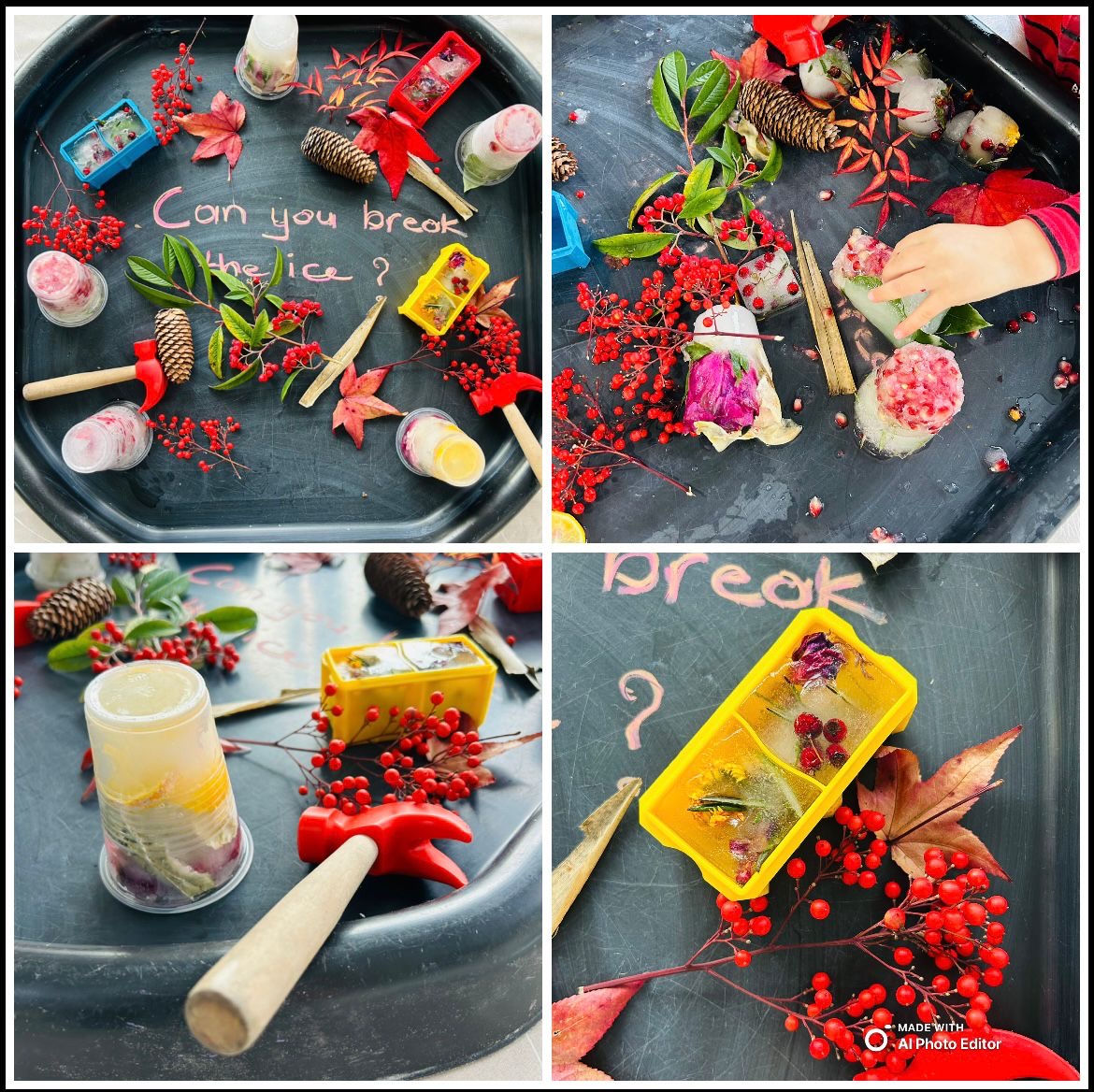
Break The Ice Tuff Tray!
The "break the ice" tuff tray activity provides an engaging, hands-on learning experience, typically for early years education, with a range of developmental benefits:
- Intent/Learning Goals:
- Problem-solving: Children experiment to discover which tools or substances (e.g., salt vs. plain water) are most effective at melting the ice.
- Scientific Exploration: Kids observe the physical properties of materials as they change state (ice to water) and learn about concepts like temperature and density.
- Fine Motor Skills: Using tools like pipettes, spoons, and small hammers helps develop hand-eye coordination and strengthen hand muscles.
- Communication & Language: The open-ended nature of the play encourages children to discuss their observations and collaborate with peers.
- Imagination & Creativity: Children can use their imagination to create stories around "rescuing" the trapped items, such as saving "polar animals" or "treasure".
- Implementation:
- Setup: Various small, water-safe objects (toy animals, LEGO bricks, buttons, etc.) are frozen in different-sized containers of water overnight. These ice blocks are then placed in a large, shallow tuff tray (also known as a tuff spot or active world tray) with raised edges to contain the mess.
- Resources: Common additions include warm water in jugs, salt, droppers/pipettes, spoons, paint brushes, and protective tools like small plastic hammers.
- Process: Children are encouraged to explore the ice freely, using the provided tools to break, melt, and chip away at the ice to free the frozen objects, often with adult guidance and support.
Typical Materials Used
- A large tuff tray (often with a stand for adjustable height).
- Large blocks of ice containing various frozen objects (toys, natural materials, etc.).
- Tools for exploration:
- Pipettes, droppers, and small jugs for applying warm water.
- Spoons or small toy hammers for chipping.
- Salt to speed up the melting process.
- Paint or food colouring to add an artistic/sensory dimension.